


Citește în română
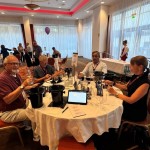
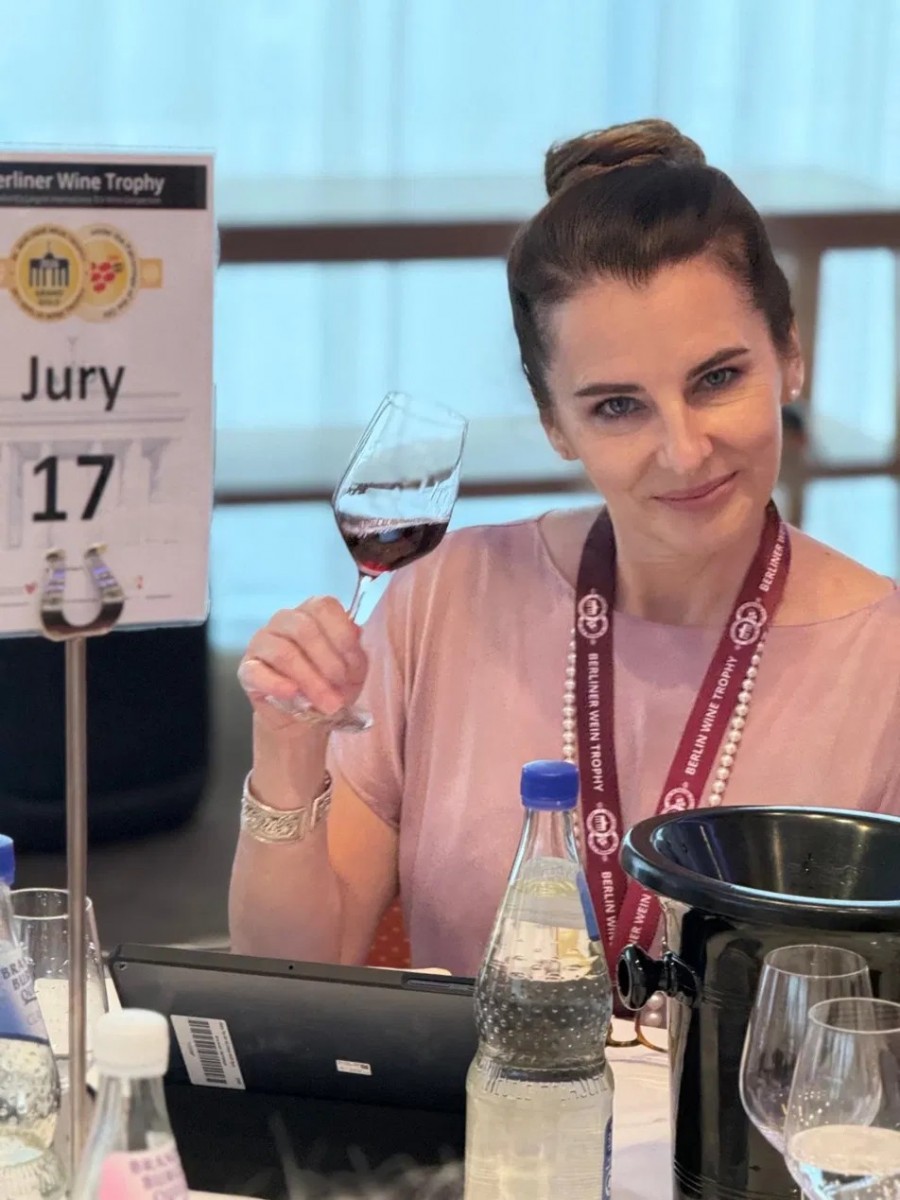 You don’t get to pick your relatives. You do get to pick the people you keep going back to, and mine are scattered across a jury room in Berlin twice a year. Beautiful, slightly unhinged, and they put up with me.
This was the 30th edition. Same venue as last winter, minus the winter novelty of not knowing where the coffee was. What actually changed was something else.
The numbers
4,200 samples. 23 panels. Fewer than usual — and, if I’m honest, fewer at every competition I’ve judged lately. That isn’t a coincidence or a crisis. It’s the market settling: producers are choosier about where they send wine, marketing budgets are thinner, and entering a competition has gone from reflex to decision.
It isn’t only about competitions, either. The OIV report published in May puts global consumption at 208 million hectolitres for 2025, down 2.7% on 2024 and the lowest level since 1957. Against 2018, that’s a 14% drop. Nine of the world’s ten largest markets drank less last year. Global vineyard area shrank for the sixth year running. When everything contracts, so does the number of bottles someone decides to put in a box and ship to a jury.
The upside was in the glass immediately. Fewer wines, but noticeably better than in previous editions — the same thing I noticed in winter. Premiumisation has stopped being a slide in someone’s presentation. You can taste it.
The new OIV sheet
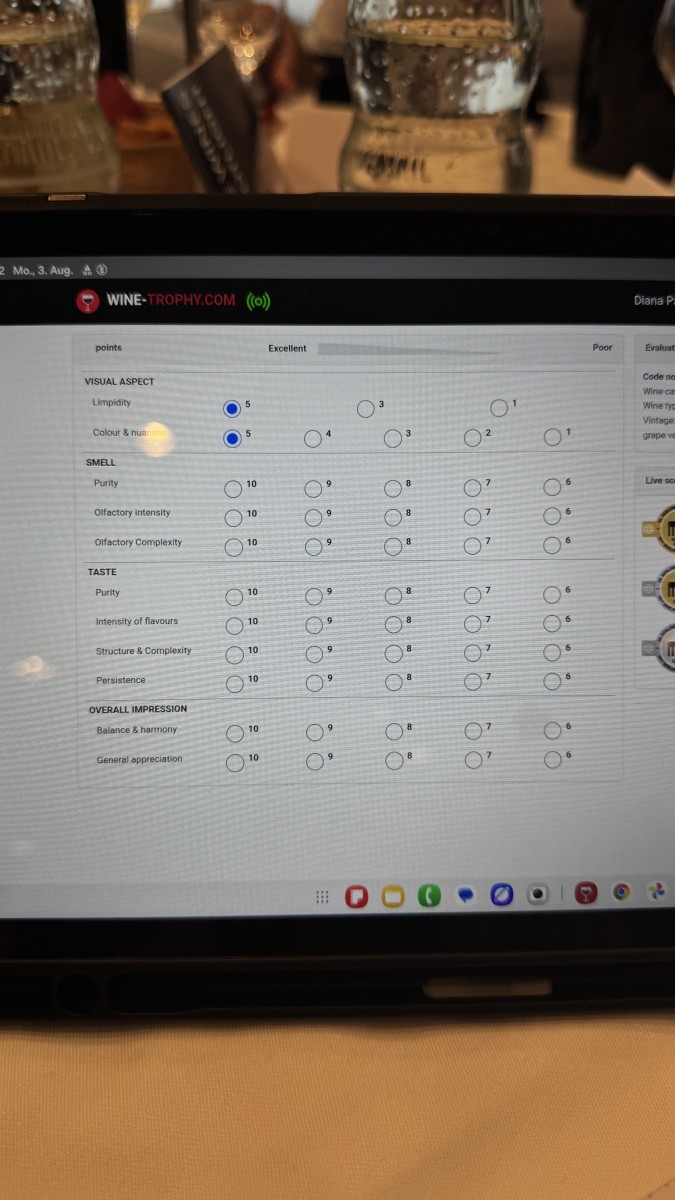
And for the first time, we worked on the OIV’s new tasting sheet, for both still and sparkling wines.
Visual aspect: limpidity, colour and nuances, plus effervescence for sparkling. Nose: purity, olfactory intensity, olfactory complexity. Palate, depending on the category: for still wines, purity, intensity of flavours, structure and complexity assessed together, and persistence; for sparkling, effervescence, purity, intensity of flavours, complexity and elegance. Then an overall impression section: balance and harmony, and general appreciation.
A fascinating exercise, and a strange one. With the new sheet in front of me, I genuinely couldn’t remember what the old one looked like. Day one caught us out — it took a while to recalibrate, to pay attention to the sheet rather than to muscle memory. By day three it felt like I’d never scored on anything else.
Worth saying plainly, because this conversation is coming everywhere sooner or later: changing a tasting sheet is not an administrative formality. It moves your attention. It makes you name things you used to bundle into “overall impression”. And a taster who never changes the grid ends up, over time, confirming what they already know.
What I tasted
Alongside France, Italy, Spain and Germany — familiar territory, confirmed rather than discovered — a few things stood out.
2025 was a good year in Luxembourg: Auxerrois, Pinot Blanc, Pinot Gris. Southern France showed up solidly with Syrah and Grenache. The Italian reds, from the north all the way down to Sicily, were fresh, fruity and easy to like. And the German Pinot Gris from the same vintage deserves a mention — Grauburgunder, as they call it here.
The Champagnes did not disappoint. Champagne, from Champagne. No notes.
There were excellent whites from Portugal, mostly Fernão Pires 2023 and 2024 — ageworthy, mineral, faintly saline. Made for smoked cod.
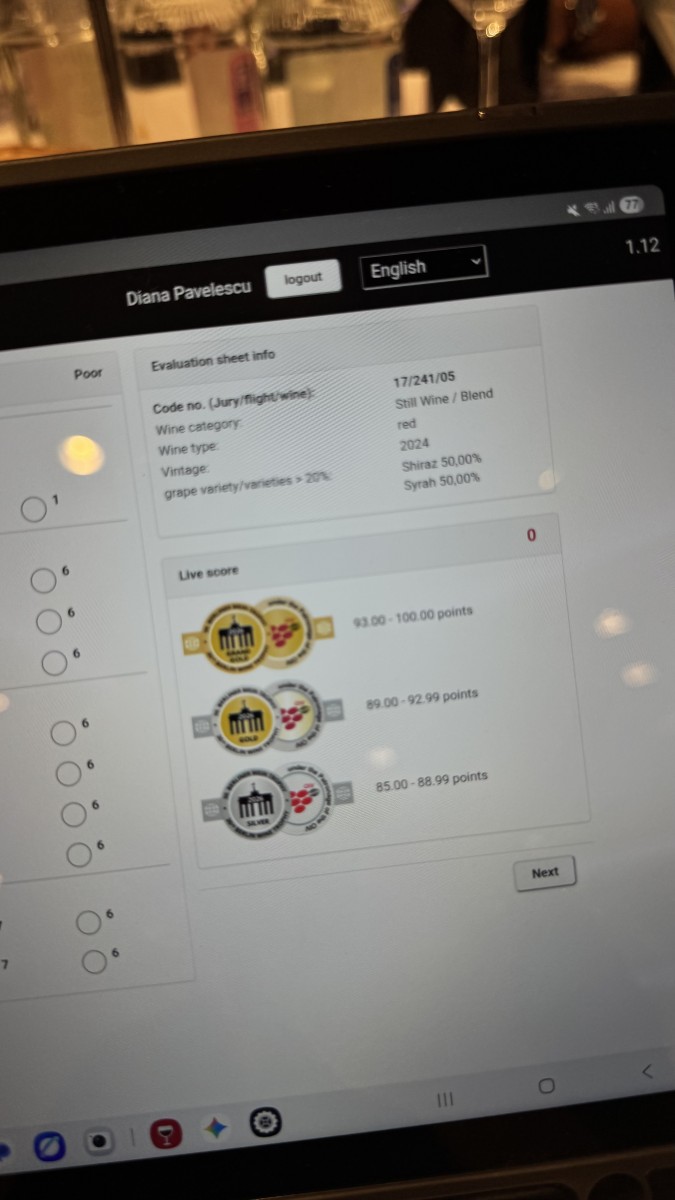
Then the curiosities, which are honestly my favourite part. A mixed flight of Australian and American reds, out of which one Australian blend stood out: 50% Shiraz, 50% Syrah. Yes, really. We assumed it referred to two differently vinified lots, but for anyone reading the back label it stays, let’s say, opaque. A very good Petite Sirah, presented as Durif. Three Grand Golds for what smelled like a Brunello or an older Chianti from 2021. And a finale of sweet wines from Germany, Hungary, Canada and Romania — one style, four countries, the same travelling exercise I’d had earlier with Italy.
Shiraz-Syrah
Something I asked the organisers for
After a panel discussion, I asked whether they could tell us the region at the end of each flight.
It would help all of us learn faster and, more to the point, assess ourselves. When you taste blind, feedback is the only mechanism you have for calibrating your memory. Without it you’re practising, not improving.
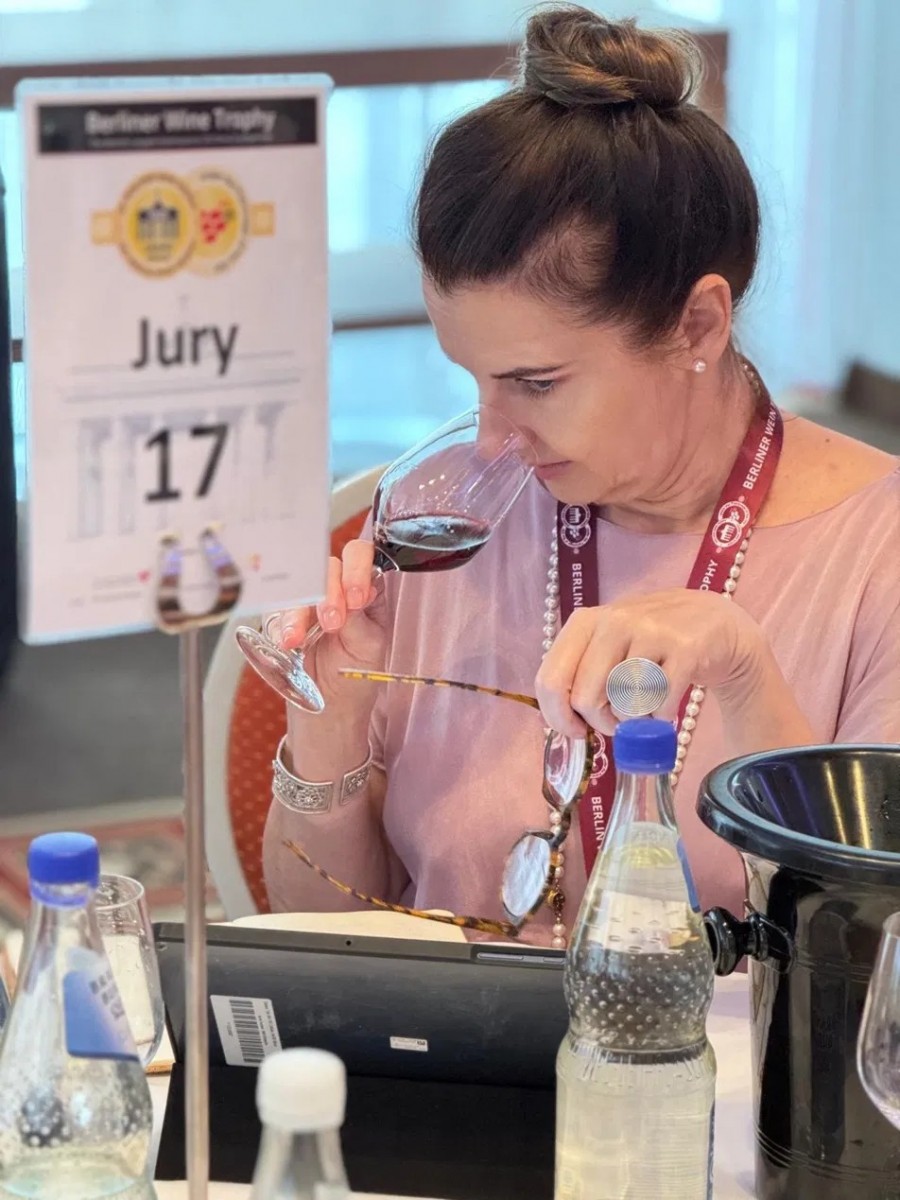
And while we’re on learning: my fellow judges were, as ever, the best part. I never get tired of saying that it’s a privilege to trade impressions with people who love the same wines but come at them from angles you hadn’t considered, or hadn’t had time to. You leave richer, and with a clear read on what’s out there, what’s selling and what’s coming.
About tasters from small countries
Four days on an international panel is not tourism. It’s concentration from first thing in the morning, hundreds of samples, a grid you have to apply identically to sample 1 and sample 200, and technical arguments with people trained in schools that aren’t yours. It is, in the most literal sense, continuing professional development.
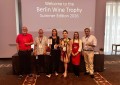
There were six Romanian tasters at this edition. Five of us are members of ADAR, the national association of authorised tasters.
I mention it because the logic runs both ways: a taster who never leaves home assesses their country’s wine against their country’s wine. And when you’re your own only reference point, every level looks fine.
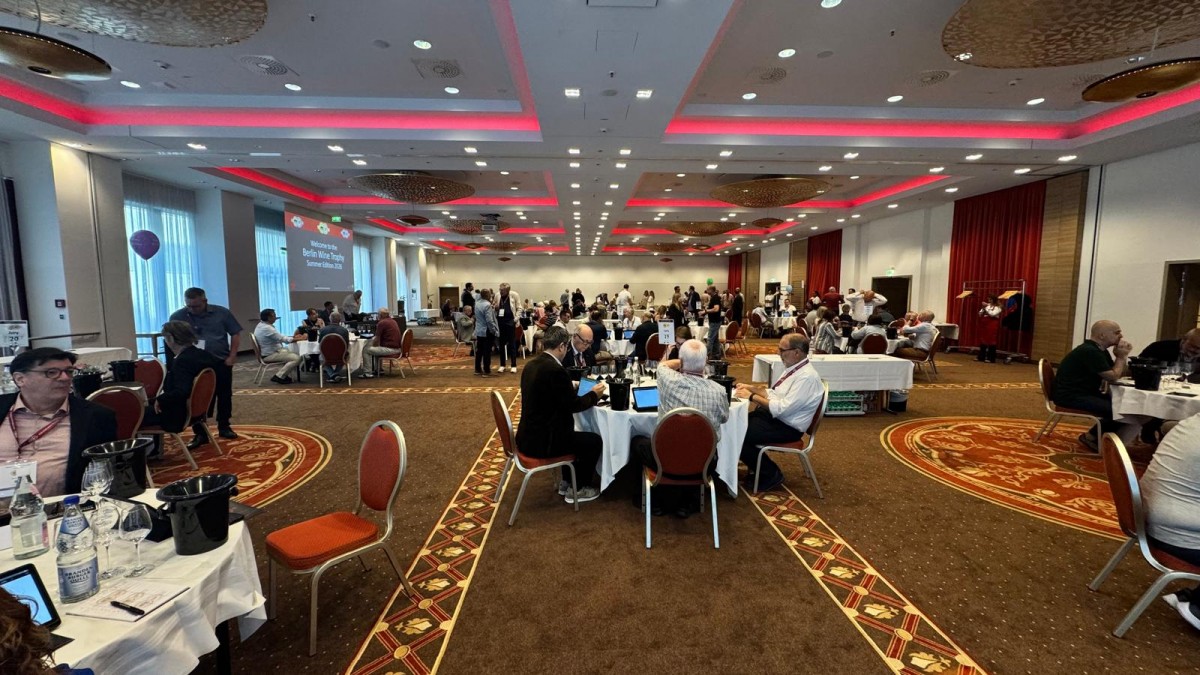
Berlin, between two tastings
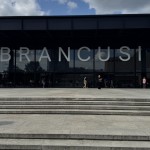
I arrived on Sunday, 2 August, reasonably early, because I’d left at an hour no reasonable person should be awake. Bags at the hotel by midday, then straight out: I had tickets for the Brâncuși exhibition at the Neue Nationalgalerie.
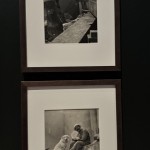
Extraordinary. Over 150 sculptures, photographs, films and archive material, plus a partial reconstruction of his Paris studio — shown outside France for the first time since he left it to the French state in 1957. This isn’t an exhibition you walk past. It’s a workshop you walk into: past a wooden threshold, and there are the saws hanging on the wall, the anvil, the plinths, the marble egg. The tools, not just what came out of them.
I’d seen what was shown in Timișoara during its year as European Capital of Culture. This was on another scale entirely.
The nice irony is that the show was made in cooperation with the Centre Pompidou. I’d meant to get to the Pompidou before it closed for renovation and never managed it. In the end it came to me, in Berlin, a week before the exhibition closed.
After 20,000 steps, one sausage and two beers, I made it back to the hotel for the welcome dinner with colleagues and, by now traditionally, Champagne.
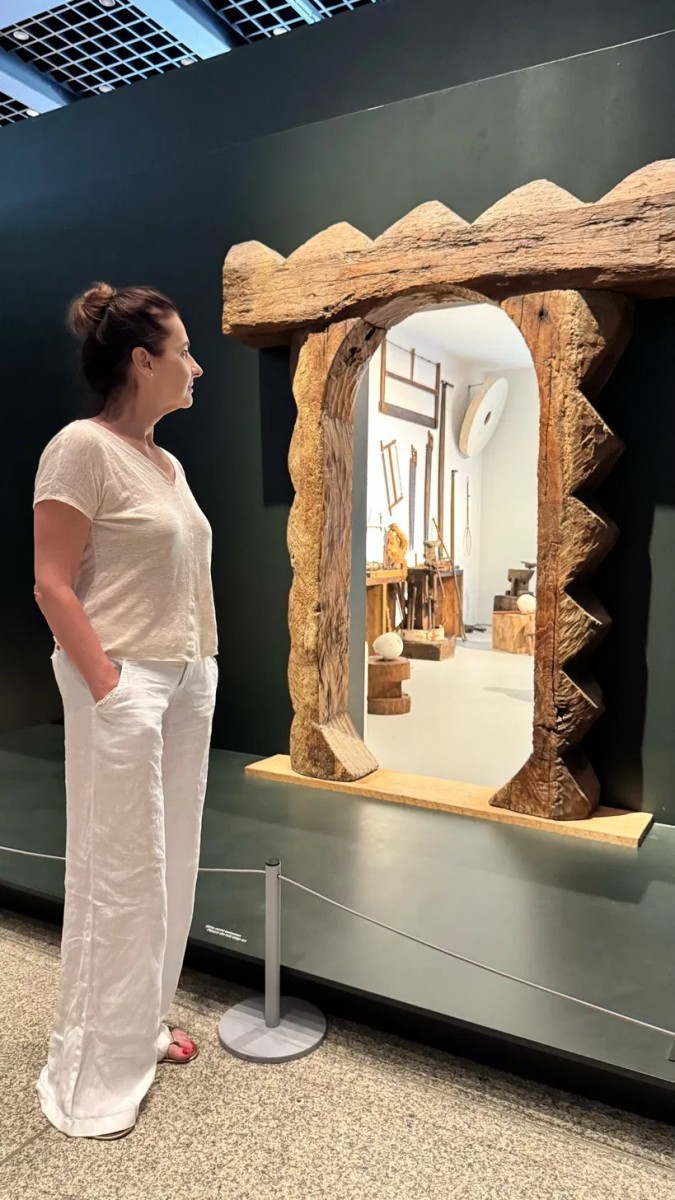
The afternoon off that wasn’t
Monday, 3 August, after the first day of judging, I theoretically had time to myself. I spent it at a masterclass on Austrian wine, run by two colleagues — journalists and wine educators, doing it because they wanted to. No promotional budget behind it. Two people who know a region well and felt like explaining it.
Styria. Sixteen wines, fifteen producers, served in pairs by variety. The region has around 5,000 hectares — roughly 11% of Austria’s vineyard area — and about 1,900 wineries. Do the division and you can see exactly what ownership looks like there: small, very small, almost all of it family.
We opened with two Rieslings from 2023, one off forty-year-old vines, the other off sixty, then two Gelber Muskateller. The rest of the line-up was overwhelmingly Sauvignon Blanc: nine of the sixteen.
And here’s the part worth keeping. Those nine didn’t resemble each other, because they didn’t come off the same ground. Opok is the region’s terroir — the local marl, the base almost everything grows on, and the word I took away from the whole evening. Layered over it: limestone, sandstone, schist, volcanic soils in Vulkanland, sand. A Sauvignon off volcanic ground, eight months in large oak, came out saline. One off sand, on fine lees in stainless steel, was crunchy and far leaner. One off limestone with opok, aged four years including two in wood, was mineral with a flinty edge. Same variety, same region, three wines you couldn’t confuse.
Many were organic or biodynamic. After the nine Sauvignons came a Weissburgunder and a Chardonnay, and the set closed unconventionally: a Souvignier Gris — a PIWI, a disease-resistant crossing — and an unfiltered natural wine with no added sulphur, two years in 500-litre barrels.
My favourites were two 2021s. One off forty-year-old vines, biodynamic, thirty months in neutral barrels: apricot, mushroom, a peppery finish. The other off sandy soils, grapefruit, with a crunch to it. Both at 40 euros, which brings me to the last thing I want to say about that evening: the wines ran from 12 to 65 euros.
A 5,000-hectare region sells Sauvignon Blanc at 65 euros a bottle. Not because its story is better than anyone else’s, but because it has named sites, identified soils, and growers who aren’t in a hurry.
That evening, since there was still no official programme, some of us kept the tradition going and went out to dinner. A menu you’d struggle to find even in Germany now: Rollmops, Handkäs with onion and caraway, pickled egg, crackling with dripping. Then Königsberger Klopse in caper sauce, Backhendl with potato salad, Szegediner goulash with bread dumplings. East Prussia, Hesse, Austria and Hungary on a single page — the cooking of a Central Europe that survives mainly in menus.
I had the herring, Nordic style, with yoghurt, apple and parsley potatoes. It was superb.
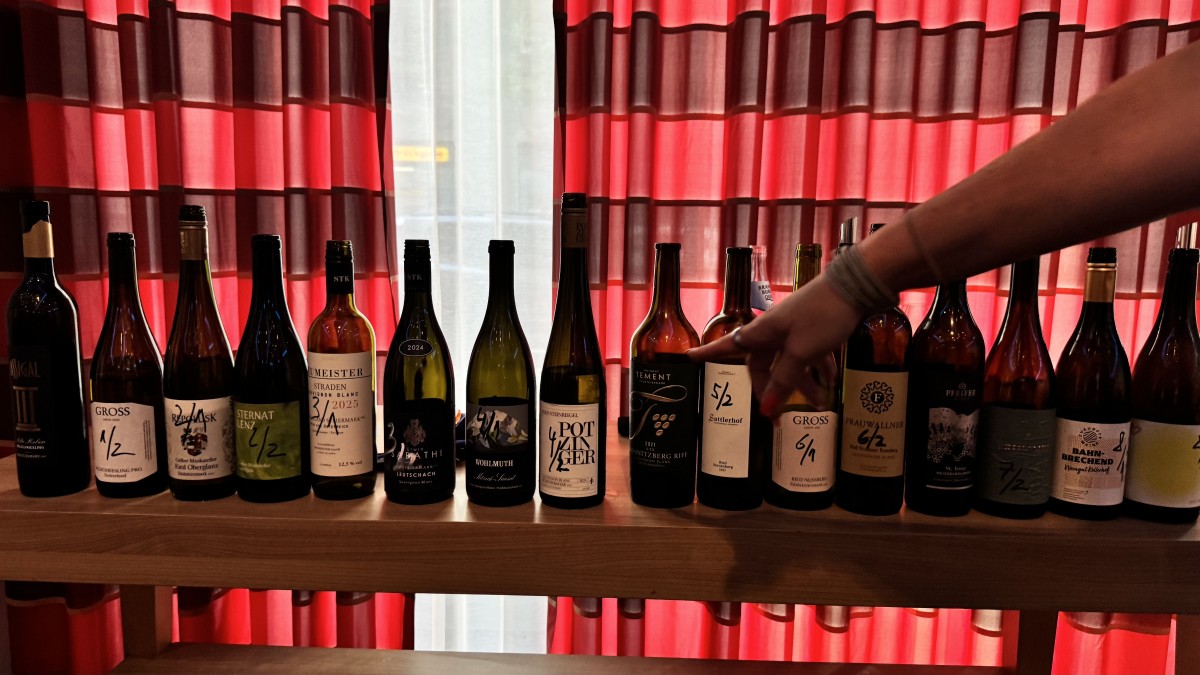
The programme, restored
This summer marked another first: the return of an organised programme around the competition. After Monday there wasn’t a free window left.
Tuesday’s surprise was a boat trip and a barbecue in the Spreewald — a biosphere reserve southeast of Berlin, in Brandenburg, a network of canals on the upper Spree, all green and quiet. Two bottles found their way onto the table in the boat: a Furmint from Zala, by Dóka Éva, and a Portuguese natural wine, Figurante from Dimas Adega, bottle 654 of 750. We relaxed, and spent the afternoon with people we’re glad to know.
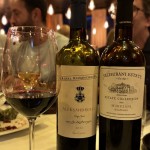
Wednesday was a Georgian evening, thanks to the Georgian wine promotion foundation and to Anna Godabrelidze. Excellent traditional food — spinach and beetroot pkhali, aubergine, tomato salad, walnuts in all of it, as the Georgians do — and local wines: an Aleksandrouli 2023 from Royal Khvanchkara, a Mukuzani 2024 from Vazisubani Estate. Plus, not least, music and dancing.
We danced as much as we possibly could. And because it was the last night for some of us, we stayed on for one more glass while a colleague played guitar, until the awareness that we had work in the morning sent us to bed. Each of us at the pace our conscience allowed.
I stayed an extra day in Berlin, meaning to see something more. I didn’t have the energy. Next time I’ll plan it better.
And that, really, is the best part of an international competition. The tasting finishes at midday. What you learn afterwards isn’t recorded anywhere.
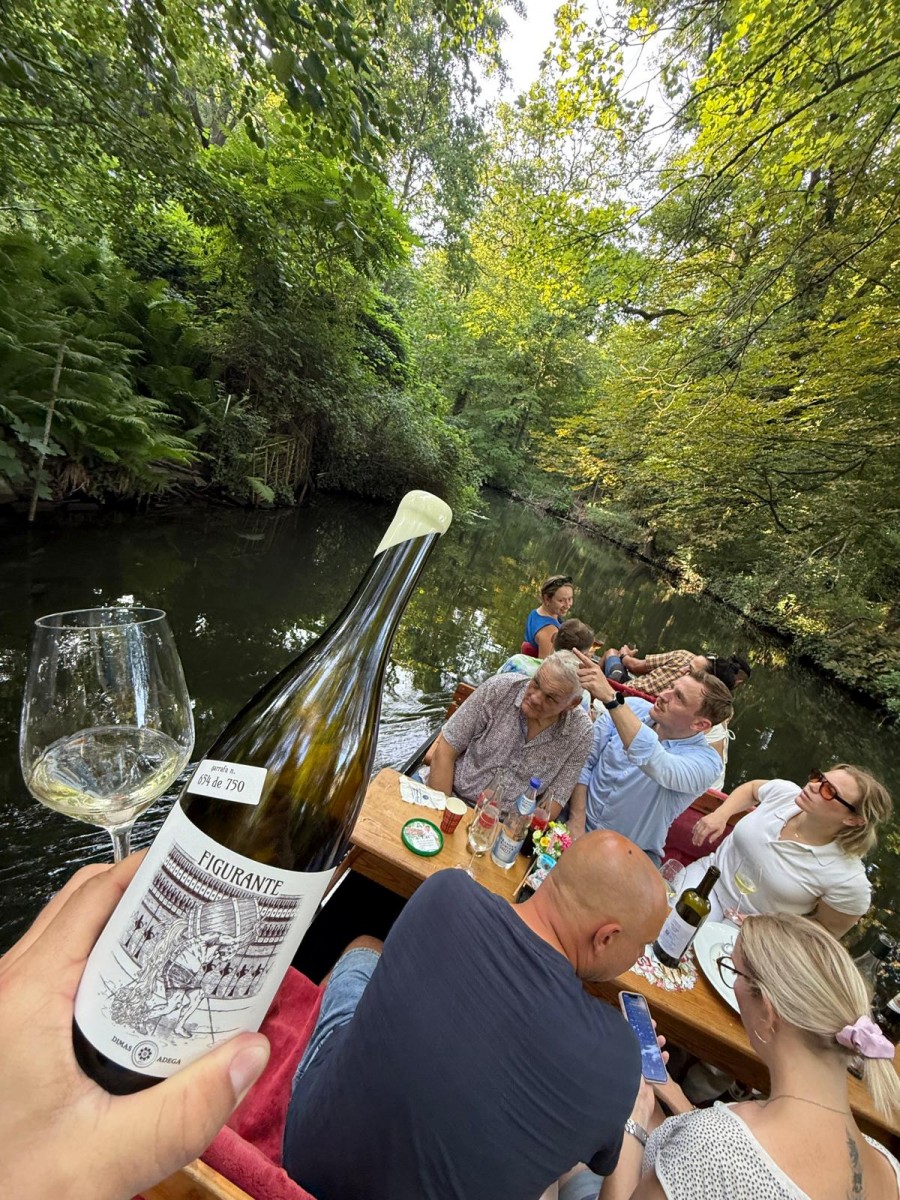
What stays
A city break folded into work, a break from routine, my August holiday, thoroughly enjoyed.
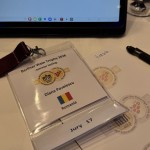
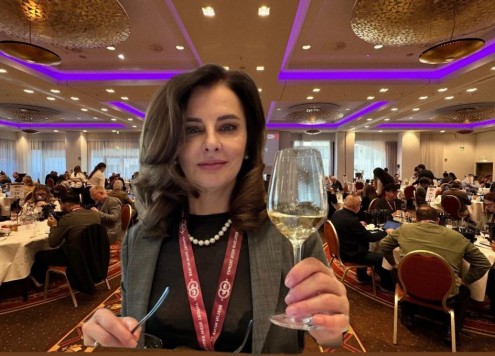
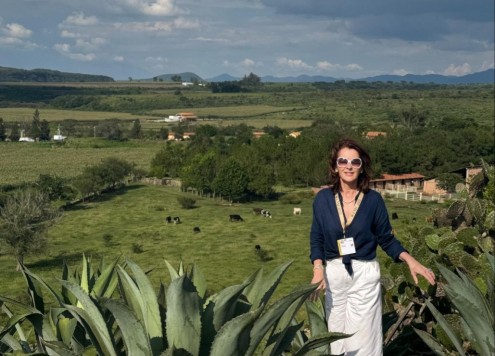
And one thought I brought home. My badge said Diana Pavelescu, Romania. Not the institution, not the association, not the school. My name and my country’s name, one under the other, for four days.
Tennis works the same way. Players travel on their own account, with coaches paid out of their own pockets, and the federation turns up for the photograph at the trophy ceremony. And still, when they win, the country wins. Nobody asks who paid for the flight.
It’s the same with tasters. We go as private individuals and we represent a country, whether or not anyone sent us. Which means the important question isn’t who pays. It’s who goes. Who sits on those panels, what they know, how they taste, and what they say when someone at dinner asks what people drink in Romania. Because we have wines that can hold their own in those flights without apologising for anything — but they don’t speak for themselves.
There were six of us.









Social Icons